The Significance of the Afro-Frontier
DSC00324+%281%29+%281%29.jpg

"Blitote" Blackdom Mitote by Marissa

AfroFrontierism & Blackdom News, Publicity and Articles


Posts in New Mexico Black History
Taos Center for the Arts Afro-Frontier #TabledInterview w/Timothy E. Nelson, Ph.D., December 13, 2021

There are two interviews. One with Dr. Nelson (youtube) and one with Nikesha Breeze (link to Spotify).

Key players to get “Four Sites of Return: Ritual, Remembrance, Reparation, and Reclamation” out into the public; Jon Eddy of Form & Concept in Santa Fe, Marisa Sage, Earthseed Black Arts Alliance (Vital Spaces fiscal agent), Meow Wolf and Hakim Bellamy (project manager and Black Education Act council member), Taos Center for the Arts, KNCE 93.5 FM, the National Endowment for the Humanities and NMSU Art Museum.

Our organization notes ongoing concerns with lack of acknowledgment and improper use of Dr. Nelson's work by the Taos, Santa Fe, Albuquerque and Roswell "Black" community. Despite attempts by Marissa Roybal to facilitate a dialogue, including proposing a presentation by Dr. Nelson to the council, efforts were rebuffed. Dr. Nelson, a historian and racial justice scholar, encountered direct omission of his contributions, notably at an Albuquerque Museum exhibition which credited Austin Miller, citing Dr. Nelson's work, without recognizing Dr. Nelson himself.

Attempts to address these issues, including a proposed meeting with Vickie Bannerman and Hakim Bellamy, were unproductive. This led Dr. Nelson to resign, refusing to condone the mistreatment and underrepresentation of his work.


In December, Chelsea Reidy from the Taos Center for the Arts reached out to Dr. Nelson for an interview. Aware of the upcoming NMSU Art Museum installation by Nikesha Breeze in January, Dr. Nelson agreed to the interview, requesting it be scheduled early January and the questions sent in advance, emphasizing his non-association with Breeze's work.

The interview, held on December 13, 2021, during a busy week for Dr. Nelson, lasted 20 minutes. Despite initial discussions, the Taos Center for the Arts combined Dr. Nelson's interview with Breeze's for a January 10th broadcast, focusing on a topic Dr. Nelson had researched. After some resistance, the Center fully credited Dr. Nelson's contribution following further requests and a threatened NEH contact, updating their records on February 9, 2022.
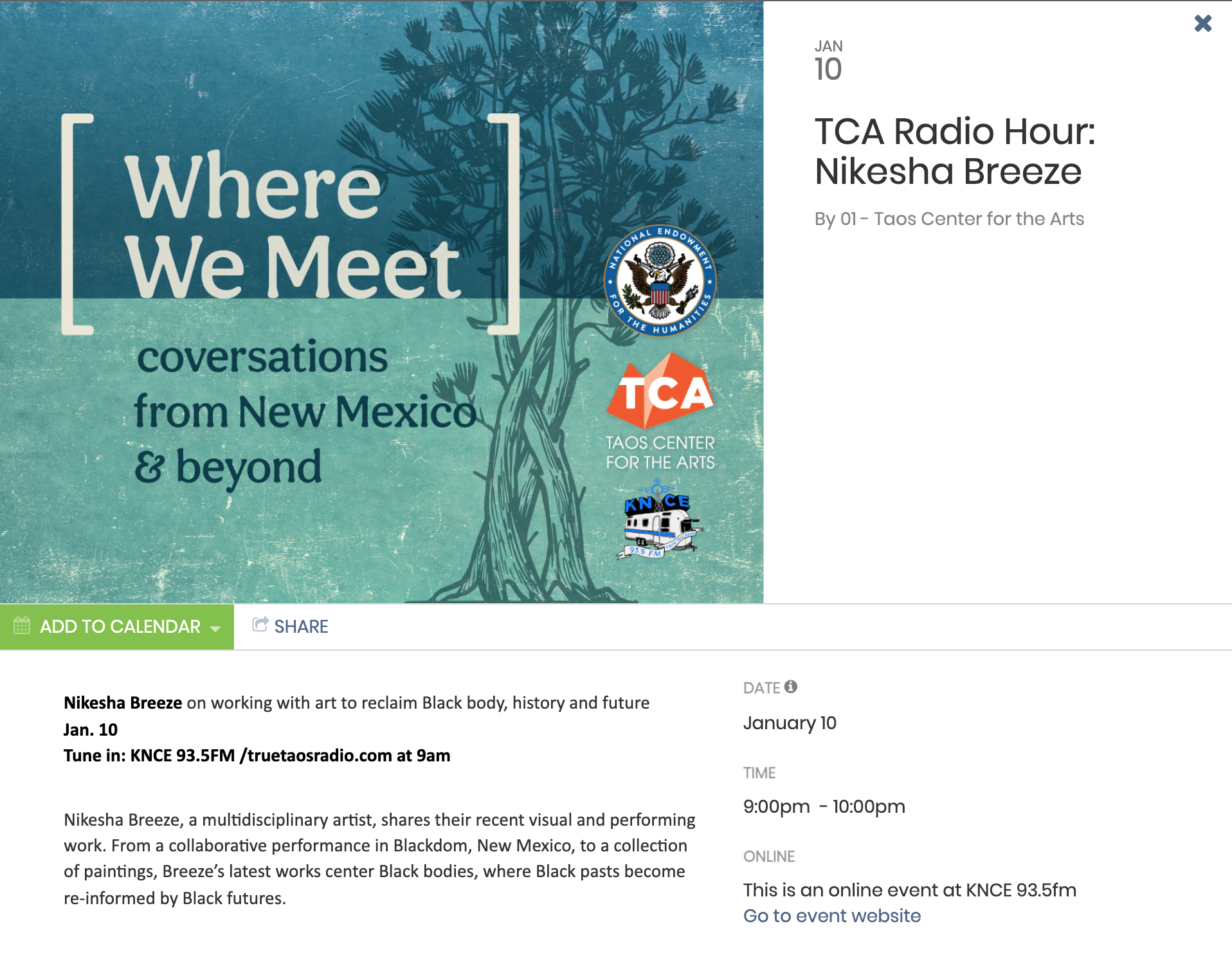
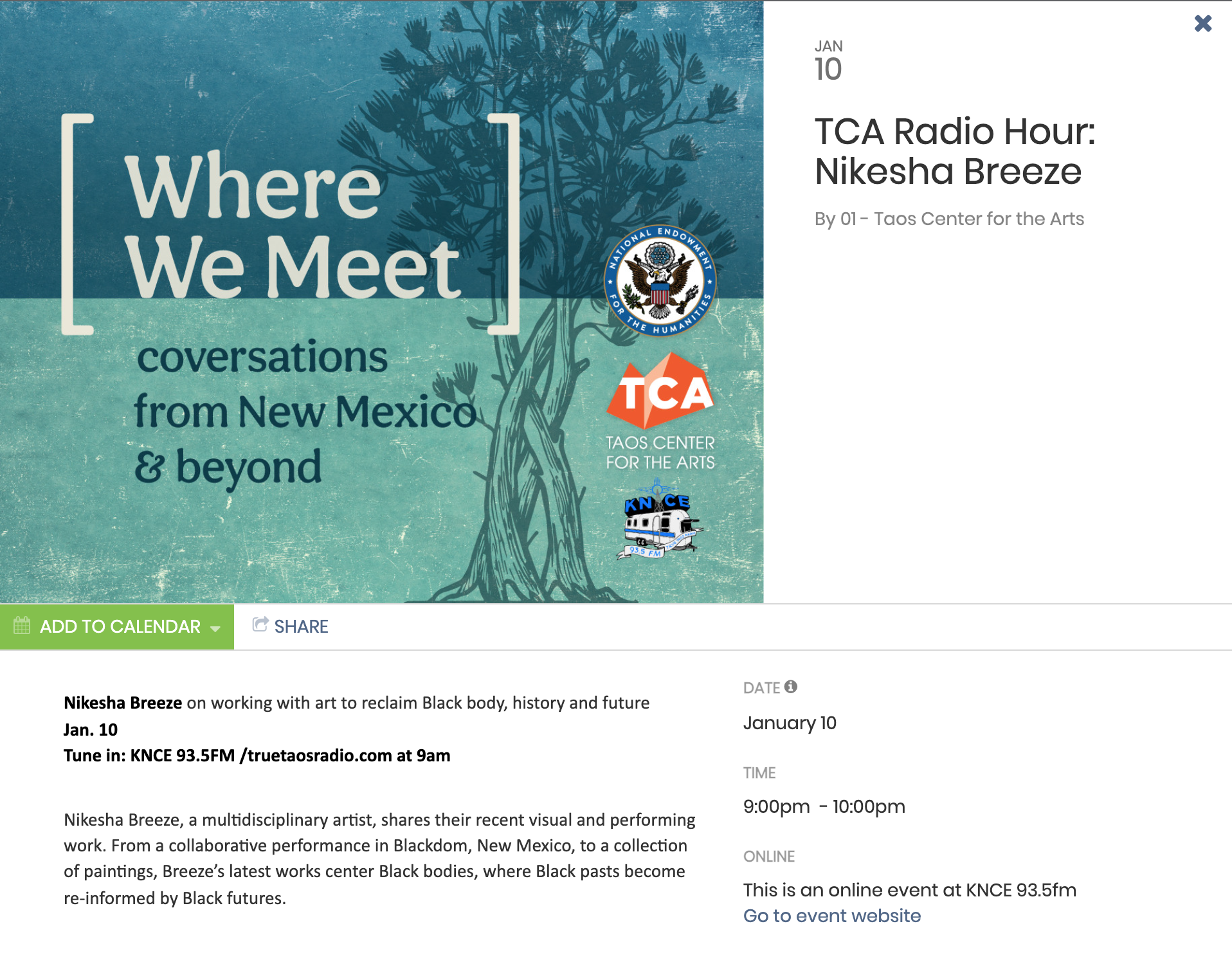
Where We Meet conversations from New Mexico & Beyond

(Click on image to listen to Chelsea Reidy interview with Nikesha.). **The episode credited Dr. Timothy Nelson for his dissertation's contribution to the Blackdom story, though initially omitted mentioning Jacqueline Page’s interview with him about his research and writing. An email later revealed Dr. Nelson's interview was dropped due to insufficient content, marking another peculiar interaction with Nikesha Breeze’s projects. After discussion, the Executive Director of TCA, advised by their PhD board member, consented to edit the acknowledgment to include the interview. Both interviews are available for listening.

Nikesha Breeze was featured in an interview to discuss her art and experiences related to Blackdom, in anticipation of her upcoming NMSU Art Museum installation and the "Indigo" installation at the Albuquerque Museum. The "Where We Meet" project is NEH-funded and has a New Mexico fiscal agent.

The interview with Dr. Nelson was used to provide the needed historical context Nikesha Breeze was ill equipped to provide during her interview.

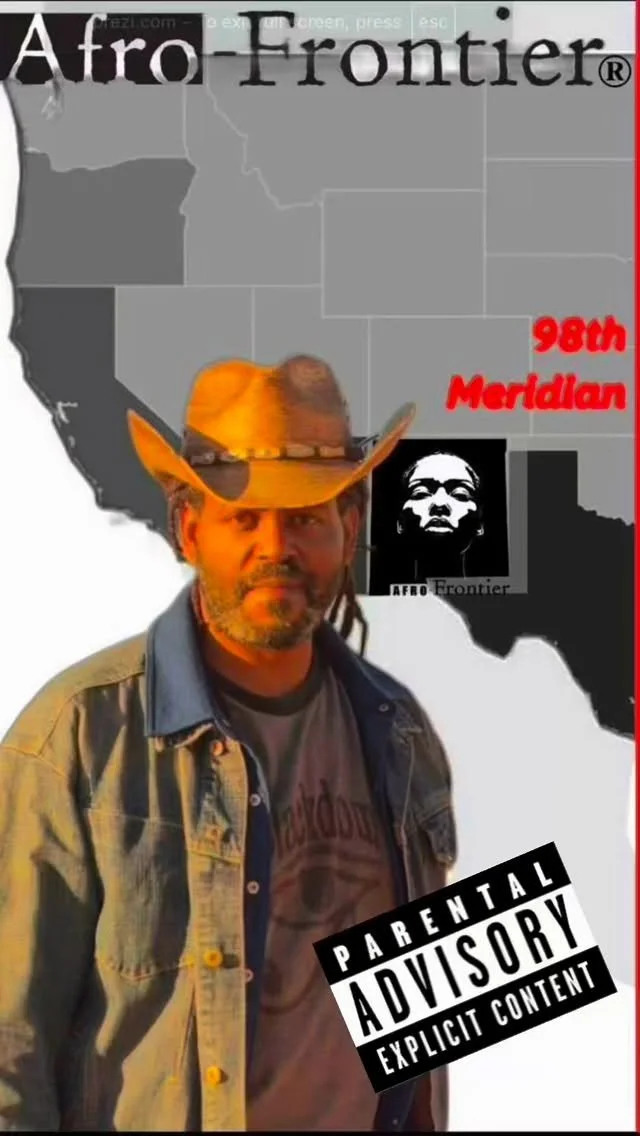
BLACK OIL COMPANY: Article from African Loverz by Frank Siekyi

“Closest articulation of Dr. Nelson's work yet.” ~M. Roybal

by Frank Siekyi - August 5, 2021

BLACK OIL COMPANY: Blackdom Oil Organization began in 1919 during the Red Summer which denoted a time of cross country savagery against Individuals of color. That year Blackdom, New Mexico’s just all-dark town, gone into contracts with Public Investigation Organization and Mescalero Oil Organization. Oil was first found in southeastern New Mexico in 1907, acquiring the district the epithet “Little Texas,” however the main fruitful business wells started creating in 1922.

In 1919, “Blackdomites” [Dr. Nelson’s coined term] profited with the hypothesis bubble that happened before the principal all around was bored when a portion of its residents fused the Blackdom Oil Organization. Conspicuous families locally including the Boyer, Ragsdale, Eubank, Entryways, and Collins families consented to store their territory with the Roswell Picacho Venture Organization to open it to oil investigation.

Blackdom started in September of 1903 when 13 African American men, driven by Isaac Jones and Blunt Boyer consolidated the townsite organization. The early years were tormented with dry spells in a dry-cultivating farming society. By 1918, for those delayed to demonstrate upland, possibilities for an oil blast in the area expanded their desperation to demonstrate up (acquire power) over their homesteaded lands.

Two ladies were noticeable in these endeavors in 1919. Ella Boyer was quick to exploit the hypothesis, finishing her patent on 160 sections of land neighboring Blackdom’s 40-section of land townsite (land prior licensed by her significant other Straightforward). Sometime thereafter Mittie Moore Wilson [Dr. Nelson’s research and work] homesteaded a square mile of land three miles south of Blackdom. Moore was a peddler who ran a place of prostitution twenty miles north of the town and was one of the space’s most affluent residents.

In January of 1920, Blackdomites reported in the Roswell Every day [Daily] Record, “Will Bore at Blackdom,” welcoming wildcatters and other oil examiners to take part in the blast that guaranteed wealth for Blackdomites who had lands made accessible for oil penetrating.

The whirlwind of promotions for Blackdom Oil [Dr. Nelson’s research and work] topped in the late spring that year as nearby occupants marked agreements with oil investigation organizations from New York to California. On September 1, 1920, The Roswell Day by day Record detailed that an unidentified California organization had “Made Area at Black dom.” The number of wells and barrels were created by Blackdom’s venture is at present lost to history.

During the 1920s, the actual town shriveled even as Blackdomites in the locale accumulated oil sovereignties. Eustace and Francis Boyer Jr., of the Boyer family, were a piece of The Second Great War partner of returning troopers who demonstrated up residences for the oil blast. Their dad Forthcoming Boyer, nonetheless, left Chaves Province where Blackdom was found and resettled in Vado, Doña Ana District, New Mexico in 1920. The Ragsdale family, in any case, remained and benefitted from the windmills they built on close-by properties and the oil income they acquired from the well on their property.

By 1930—and the beginning of the Economic crisis of the early 20s—Blackdom stopped to exist. Blackdom Oil, be that as it may, kept on creating sovereignties for conspicuous dark families nearby. Nearby papers detailed in 1930 that the Blackdom Oil Organization bored investigation wells no less than 1,600 feet down. Forthcoming Boyer, in a 1947 meeting, said that sovereignty installments to Blackdomites streamed all the way into the post-The Second Great Wartime.

Article by Santa Fe New Mexican Journalist, Robert Nott
 
IMG_6100.jpeg

“They called it Blackdom for a reason. This was a Black Kingdom where sovereigns lived.”

—Timothy E. Nelson

Some 60-plus years before African Americans marched and fought for equal treatment in the nation’s civil rights movement, Blackdom stood as a symbol that African Americans could be masters of their own destiny.

“Blackdom proved black people could thrive, not just survive,” said African American historian and author Timothy Nelson, who wrote a 200-page dissertation on the rise and fall of Blackdom in 2015 for the University of Texas at El Paso.

“They called it Blackdom for a reason. This was a Black Kingdom where sovereigns lived,” he said.

And yet, some 30 years after its founding in the early 1900s, Blackdom was all but abandoned, a victim of drought, nature and an oil boom gone bust because of the Great Depression.

Today, a plaque commemorating the history of Blackdom and a few stone ruins are all that remain of the original community, located about eight miles west of Dexter and 20 miles south of Roswell.

Blackdom’s fight for a self-sustaining life came decades before King urged African Americans to take to the streets to demand equality with such phrases as, “If you can’t fly then run if you can’t run then walk if you can’t walk then crawl, but whatever you do, you have to keep moving forward.”