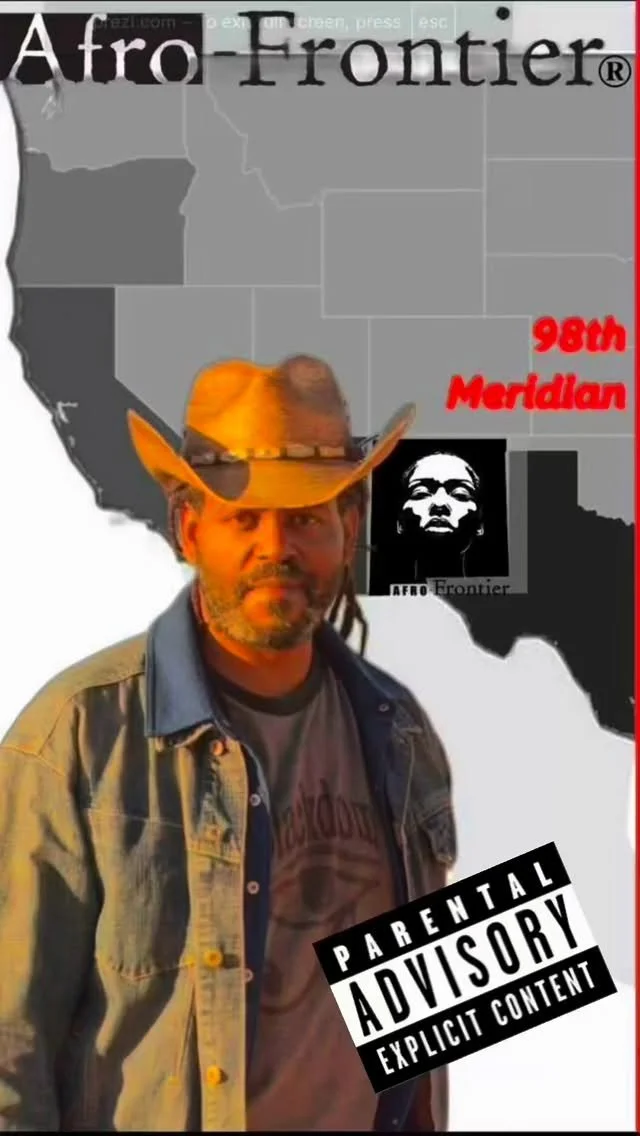
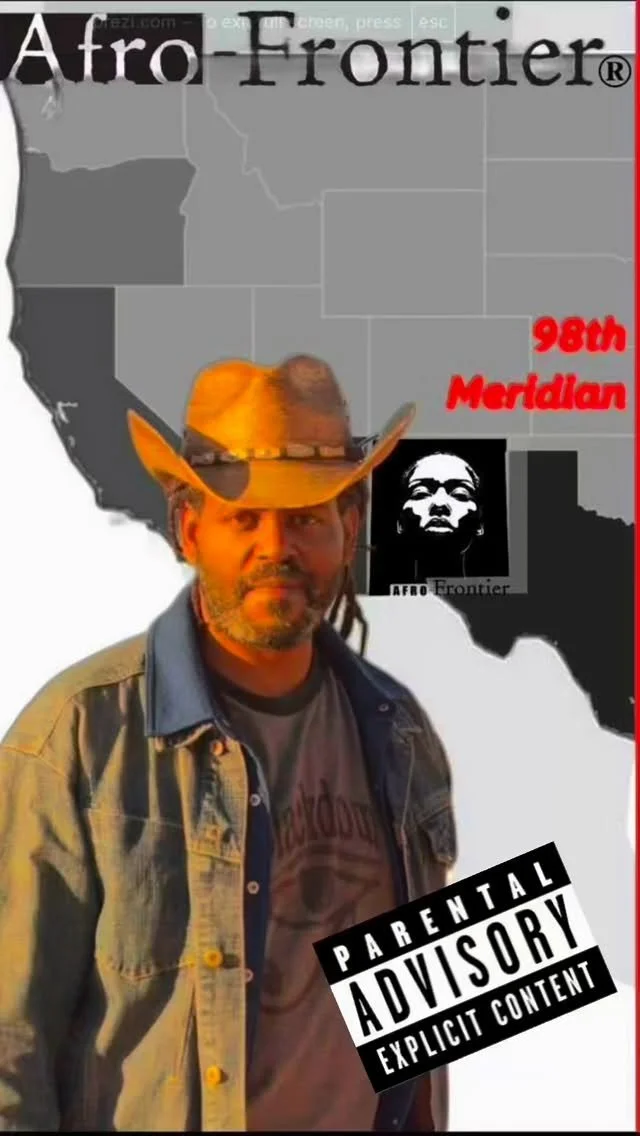
History and new inding of Blackdom, NM in Southeastern, NM
History behind the town of Blackdom, New Mexico
Local historian provides new research into the town
https://www.koat.com/article/blackdom-new-mexico-history-dr-nelson-new-research/46688452

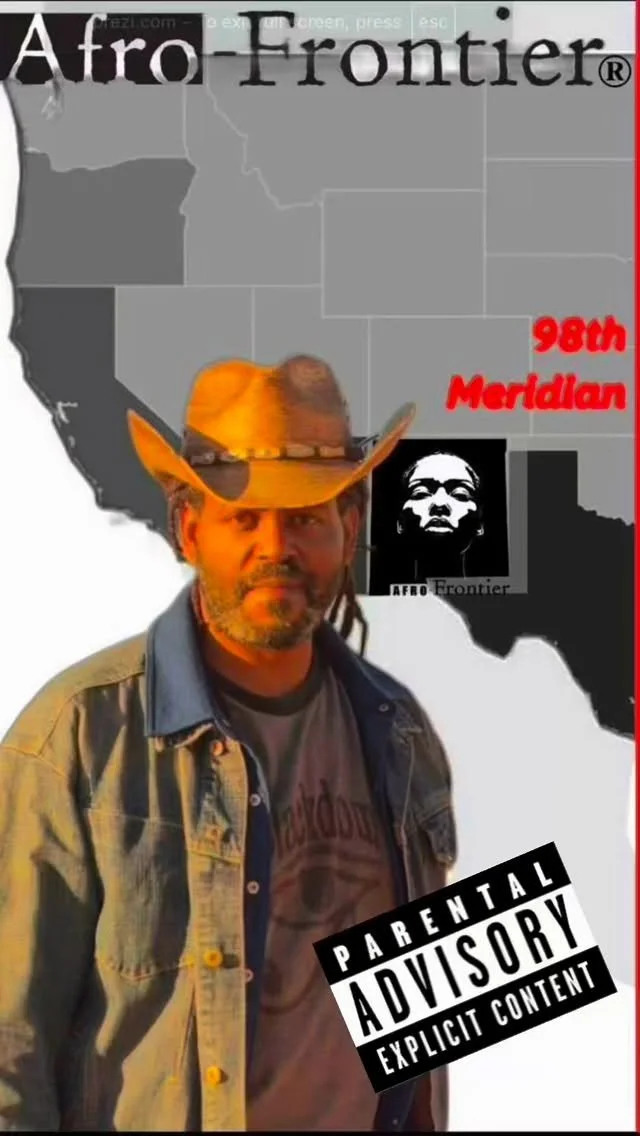
AfroFrontierism & Blackdom News, Publicity and Articles
History and new inding of Blackdom, NM in Southeastern, NM
https://www.koat.com/article/blackdom-new-mexico-history-dr-nelson-new-research/46688452

Marissa Roybal, COO, Blackdom Clothing and Productions Ltd. is imbued with the value of self-sufficiency and an entrepreneurial spirit. Her extensive representation, business, relationship building, and organizational skills along with her passion is her contribution to the development of Blackdom: The Afro-Frontier. Her values, and passion for alternative forms of education, and racial justice were forged at a young age and continue to drive her work and vision to foster cultural change. https://www.pandora.com/podcast/the-square-peg-podcast/marissa-roybal-connecting-causes-with-community/PE:6641187?part=ug-desktop&corr=34077051
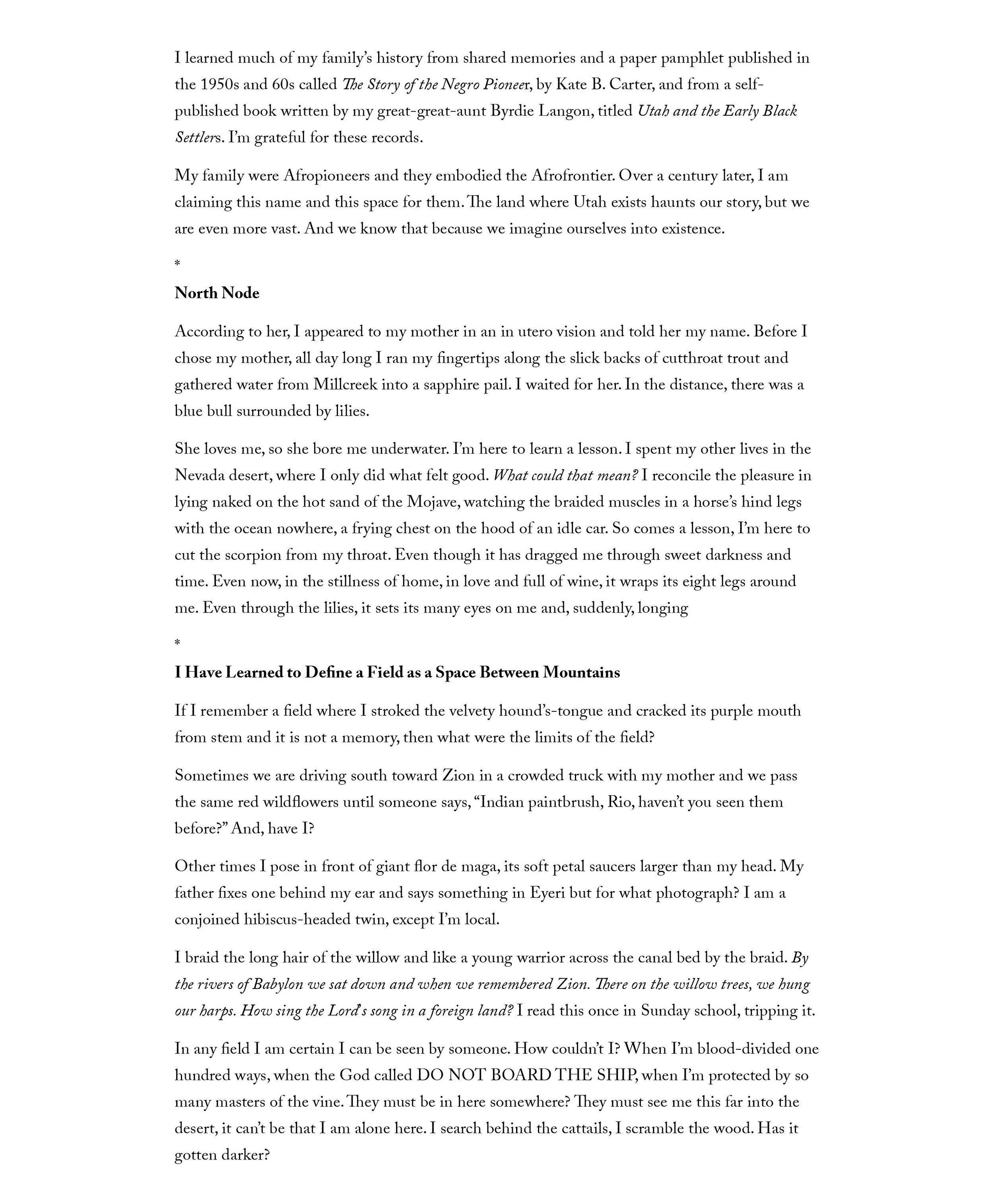
Golden Ax by Rio Cortez · Google Books Audiobook preview: https://www.youtube.com/watch?v=UhX1dBh4W4k&t=8s
Much like the way Afrofuturism seeks to envision a future for Black people at the intersection of imagination and science fiction, a future that also seeks to remember the Black past, in many ways Golden Ax hopes to find its place and definition as a work of “Afropioneerism” or “Afrofrontierism”—terms that describe and inform my family ancestry and experience. This work is autobiographical, but it is also a work of imagined history. These terms approach my experience of girlhood in Utah, wondering how we came to be there, feeling singular in a place where I knew we had been for generations.
Continuing to ask myself, “How does a story begin?,” the question became an obsession. This is a question so many ask, whose histories are cut short by the design of transatlantic slavery. I no longer wondered to myself whether aliens possibly put me on Earth, smack-dab in the Wasatch Mountains, or other systems of sci-fi that I transposed onto myself as a child. Eventually, the question became an urge to mine the hidden history of the Black West, and to tell the story of how we came to settle that frontier, both physically and spiritually. The poems in Golden Ax reflect the outward and earthly landscapes of the Afrofrontier, and the inner, cosmic imagination of the Afropioneer.
NOTE: Rio Cortez, Penguin Books and LitHub have validated the word Afrofrontier to be one word without a hyphen; according to Dr. Nelson, it was discussed at length amongst his dissertation committee; it didn’t exist at the time so the hyphen was required.
Links to other articles:
https://www.globeslcc.com/2023/04/24/rio-cortez-golden-ax-poetry-reading-taylorsville-campus/
https://www.shondaland.com/inspire/books/a41002124/rio-cortez-golden-ax/
https://the1a.org/segments/poet-rio-cortez-on-afropioneerism-and-black-settlers-out-west/
https://www.poetryfoundation.org/harriet-books/reviews/158301/golden-ax
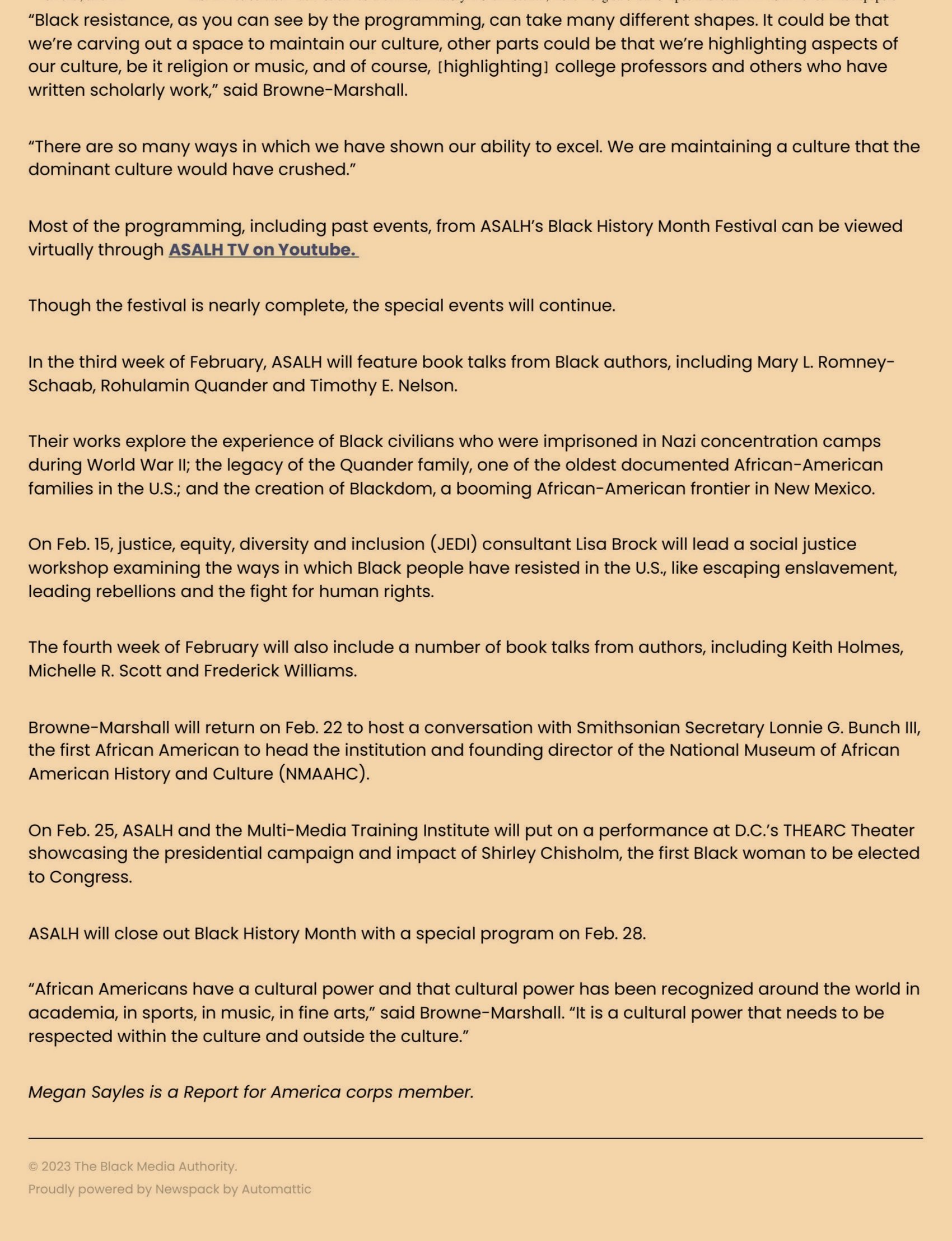
There are two interviews. One with Dr. Nelson (youtube) and one with Nikesha Breeze (link to Spotify).
Key players to get “Four Sites of Return: Ritual, Remembrance, Reparation, and Reclamation” out into the public; Jon Eddy of Form & Concept in Santa Fe, Marisa Sage, Earthseed Black Arts Alliance (Vital Spaces fiscal agent), Meow Wolf and Hakim Bellamy (project manager and Black Education Act council member), Taos Center for the Arts, KNCE 93.5 FM, the National Endowment for the Humanities and NMSU Art Museum.
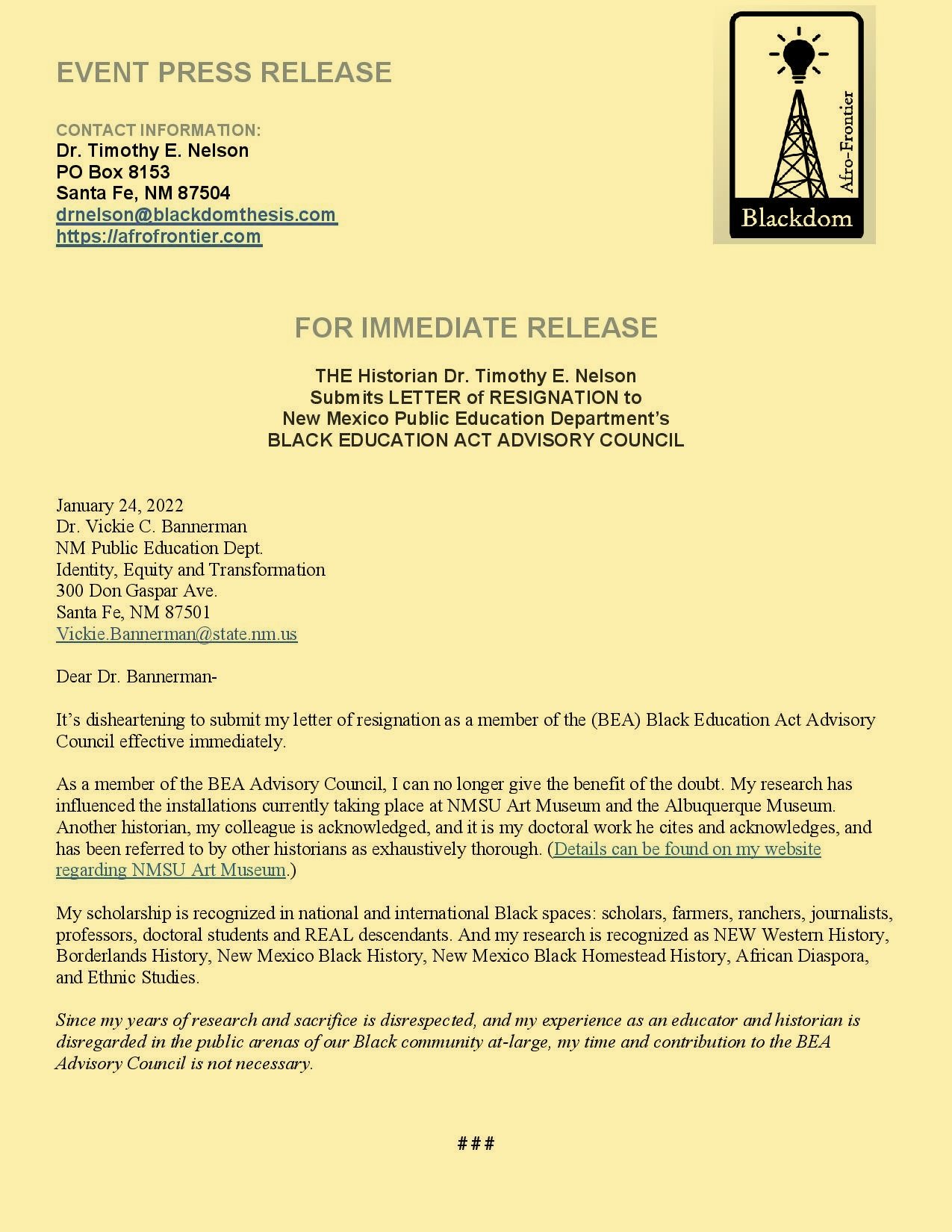
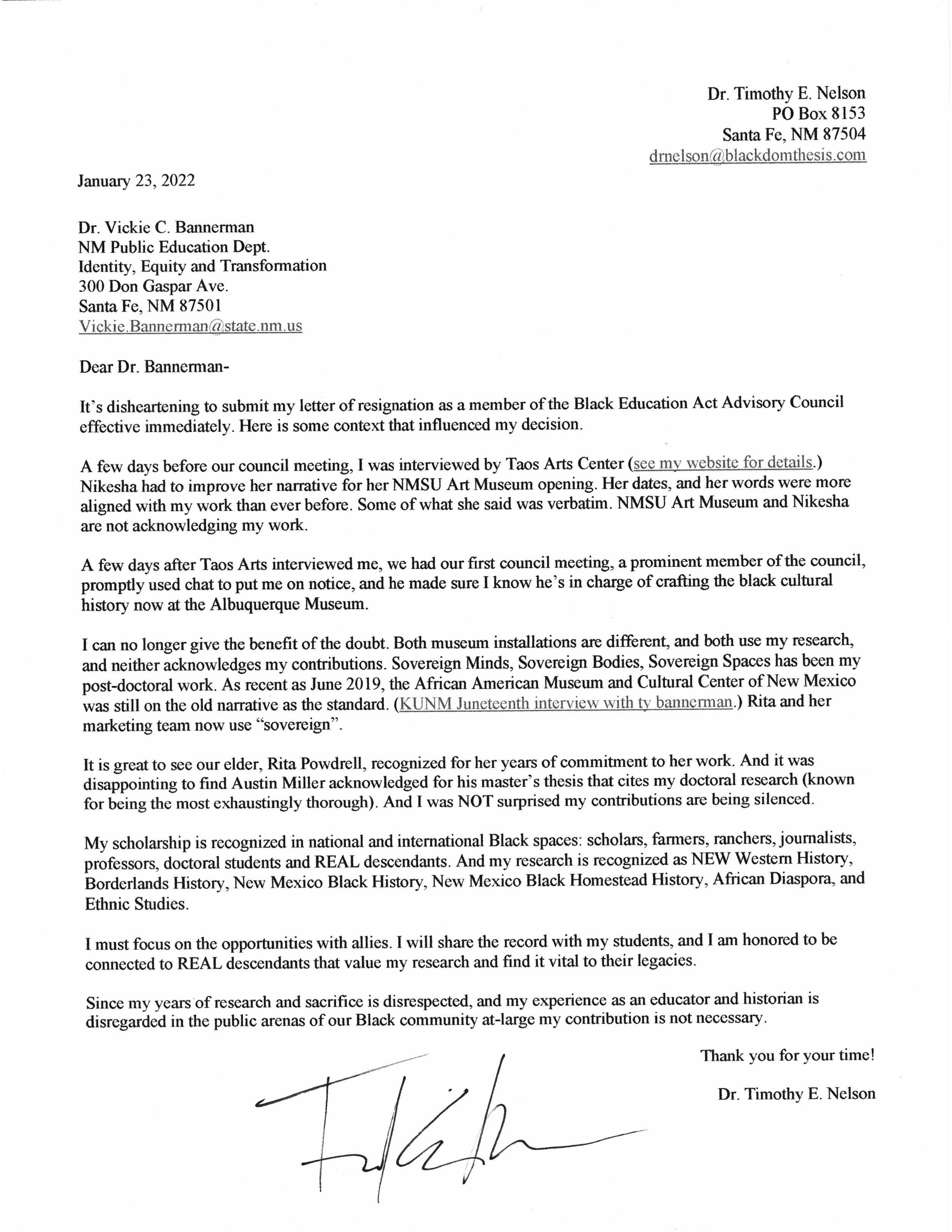
Our organization notes ongoing concerns with lack of acknowledgment and improper use of Dr. Nelson's work by the Taos, Santa Fe, Albuquerque and Roswell "Black" community. Despite attempts by Marissa Roybal to facilitate a dialogue, including proposing a presentation by Dr. Nelson to the council, efforts were rebuffed. Dr. Nelson, a historian and racial justice scholar, encountered direct omission of his contributions, notably at an Albuquerque Museum exhibition which credited Austin Miller, citing Dr. Nelson's work, without recognizing Dr. Nelson himself.
Attempts to address these issues, including a proposed meeting with Vickie Bannerman and Hakim Bellamy, were unproductive. This led Dr. Nelson to resign, refusing to condone the mistreatment and underrepresentation of his work.
In December, Chelsea Reidy from the Taos Center for the Arts reached out to Dr. Nelson for an interview. Aware of the upcoming NMSU Art Museum installation by Nikesha Breeze in January, Dr. Nelson agreed to the interview, requesting it be scheduled early January and the questions sent in advance, emphasizing his non-association with Breeze's work.
The interview, held on December 13, 2021, during a busy week for Dr. Nelson, lasted 20 minutes. Despite initial discussions, the Taos Center for the Arts combined Dr. Nelson's interview with Breeze's for a January 10th broadcast, focusing on a topic Dr. Nelson had researched. After some resistance, the Center fully credited Dr. Nelson's contribution following further requests and a threatened NEH contact, updating their records on February 9, 2022.
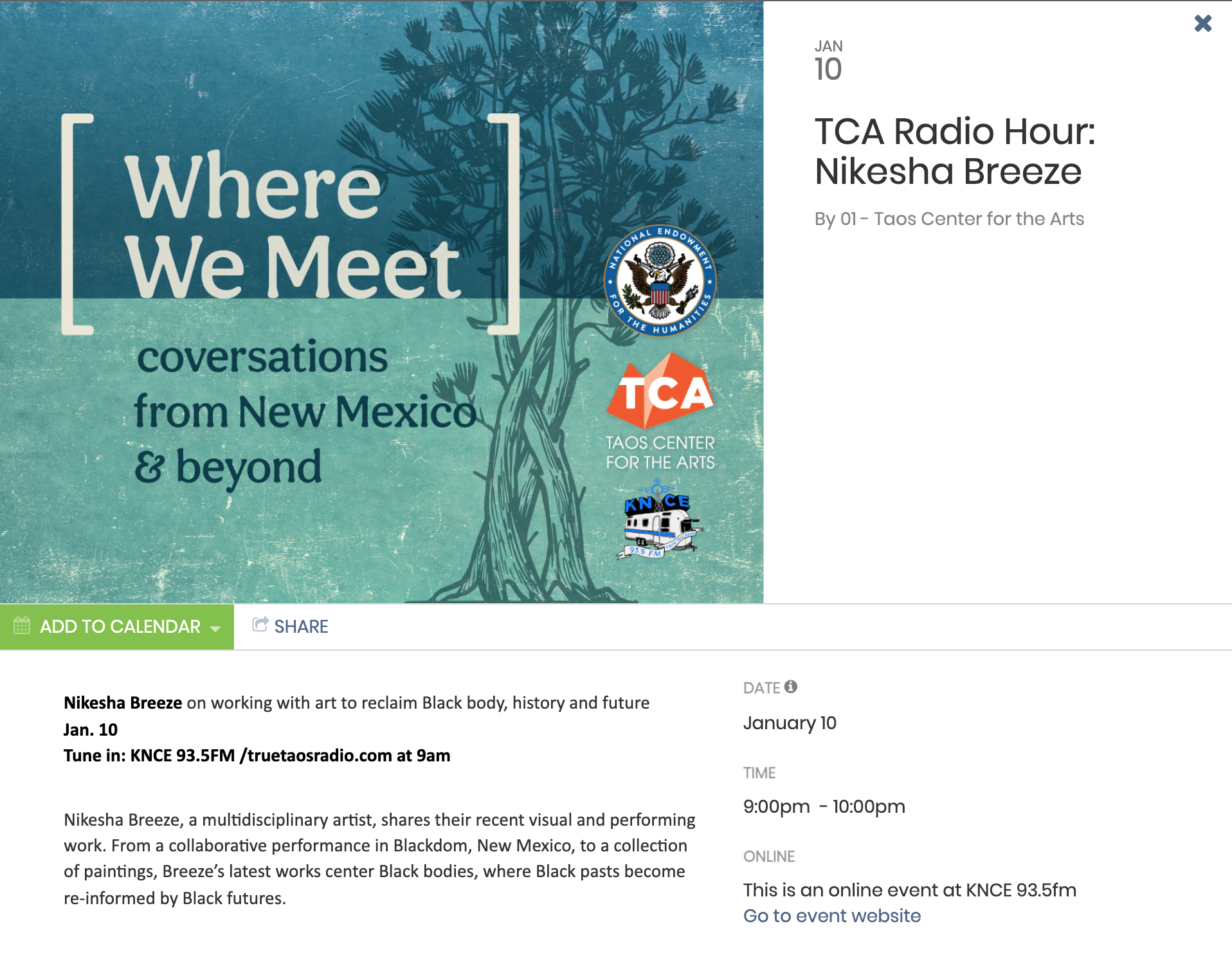
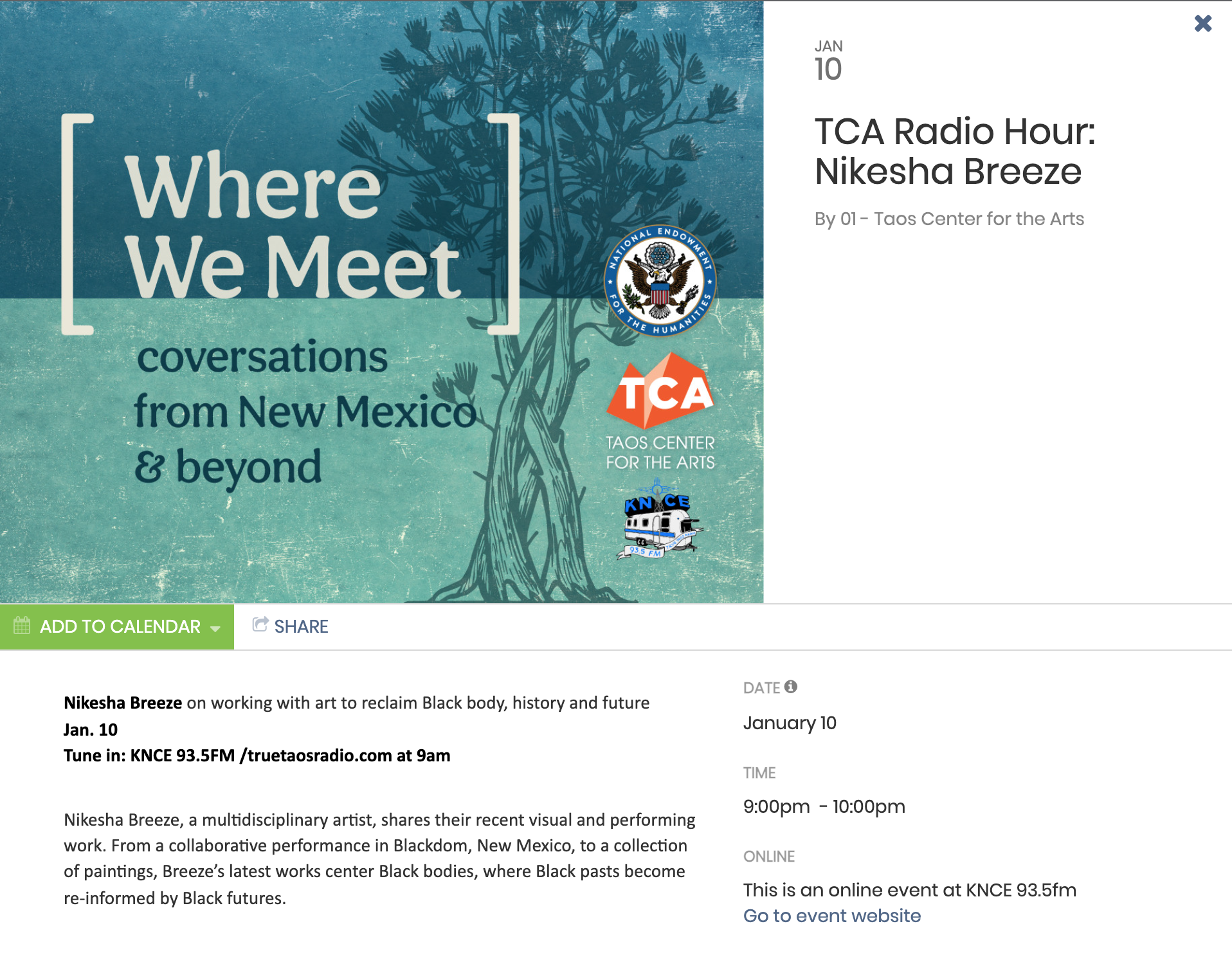
(Click on image to listen to Chelsea Reidy interview with Nikesha.). **The episode credited Dr. Timothy Nelson for his dissertation's contribution to the Blackdom story, though initially omitted mentioning Jacqueline Page’s interview with him about his research and writing. An email later revealed Dr. Nelson's interview was dropped due to insufficient content, marking another peculiar interaction with Nikesha Breeze’s projects. After discussion, the Executive Director of TCA, advised by their PhD board member, consented to edit the acknowledgment to include the interview. Both interviews are available for listening.
Nikesha Breeze was featured in an interview to discuss her art and experiences related to Blackdom, in anticipation of her upcoming NMSU Art Museum installation and the "Indigo" installation at the Albuquerque Museum. The "Where We Meet" project is NEH-funded and has a New Mexico fiscal agent.
The interview with Dr. Nelson was used to provide the needed historical context Nikesha Breeze was ill equipped to provide during her interview.
Anti-racism training for educators, a culturally inclusive curriculum, and a hotline for reporting school-based incidents of racial bias are among the strategies to be implemented in the coming school year to meet requirements of the New Mexico Black Education Act, which takes effect July 1.
The New Mexico Legislature is considering a bill that would support African American education
New culturally inclusive strategies will be implemented in New Mexico schools
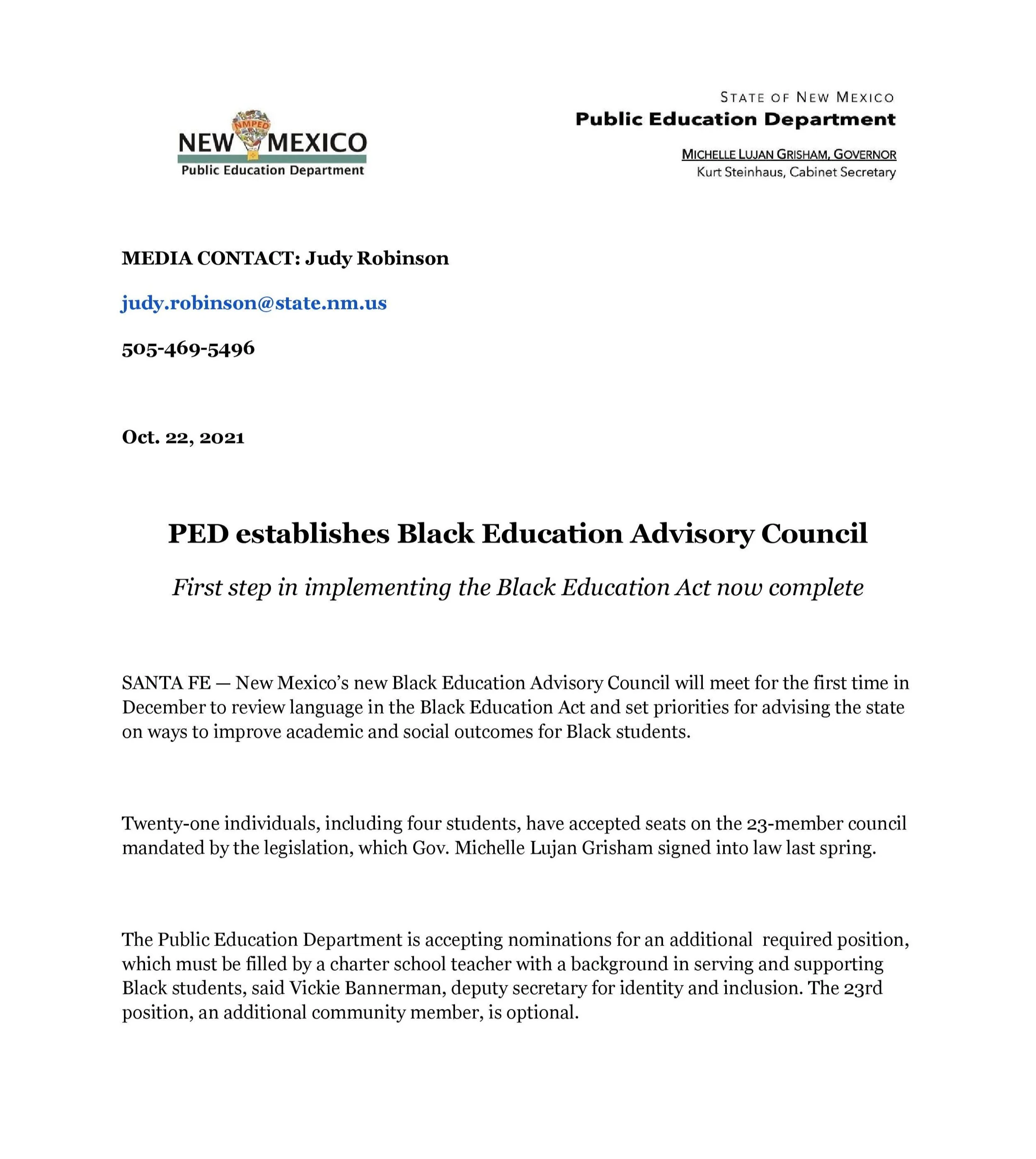
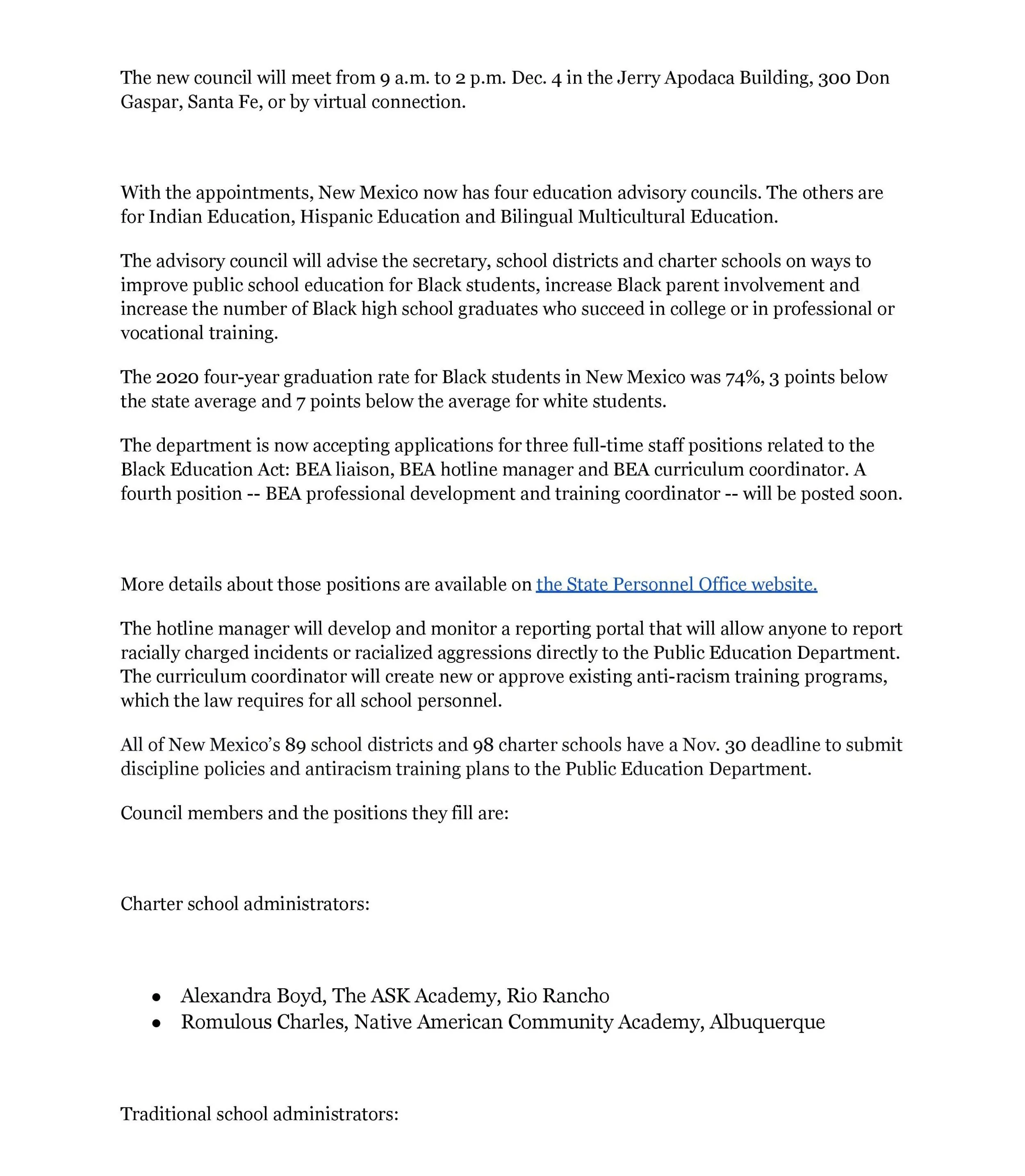
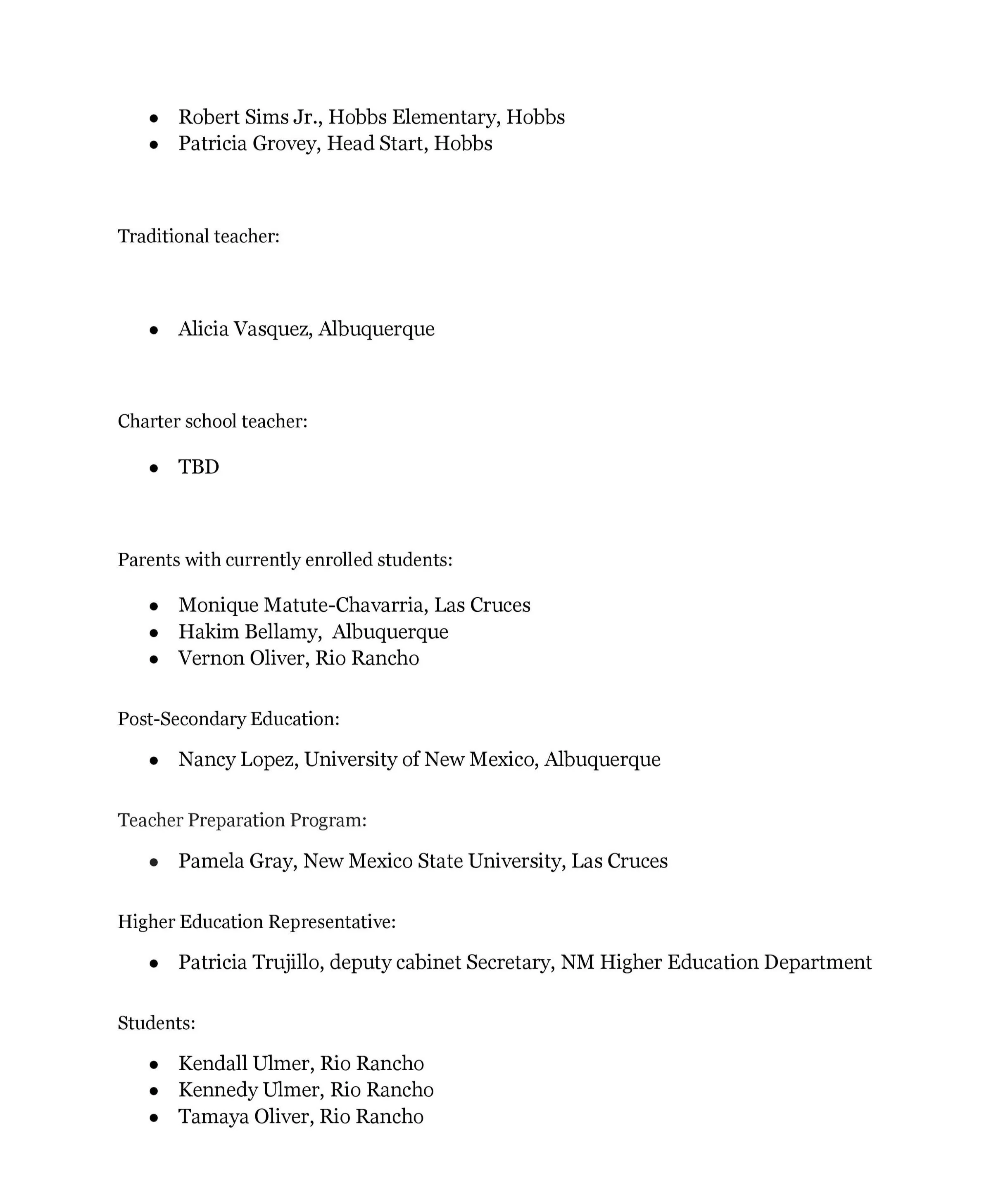
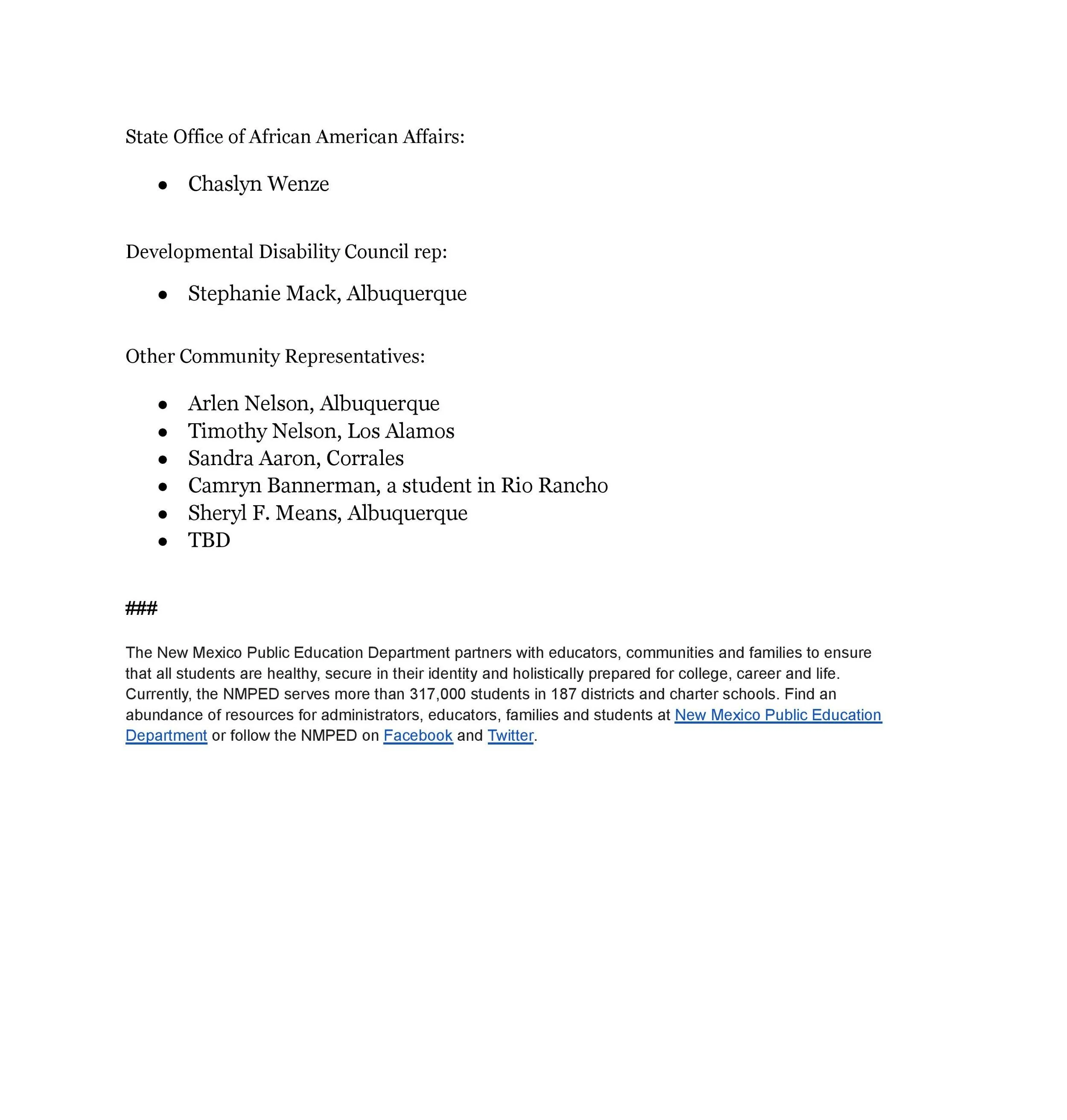
PED Establishes Black Education Advisory Council
HB43-924 Jan 26, 2021 Legislative Session
Our organization notes ongoing concerns with the exclusion, misuse, and infringement of Dr. Nelson's work by the Taos, Santa Fe, Albuquerque and Roswell "Black" communities, highlighting a lack of transparency and open critique. Despite efforts, individuals like Vickie Bannerman, Hakim Bellamy, Rita Powdrell, Nikesha Breeze, and Gregory Waits have shown limited engagement. For instance, in 2019, Dr. Nelson's invitations to collaborate on a panel for the 2020 Western History Conference were declined or ignored, with Gregory Waits withdrawing last minute but managing to feature his presentation through Austin Miller, Ph.D. Candidate, Southern Methodist University, Interpreting Blackdom (UNM master’s thesis).
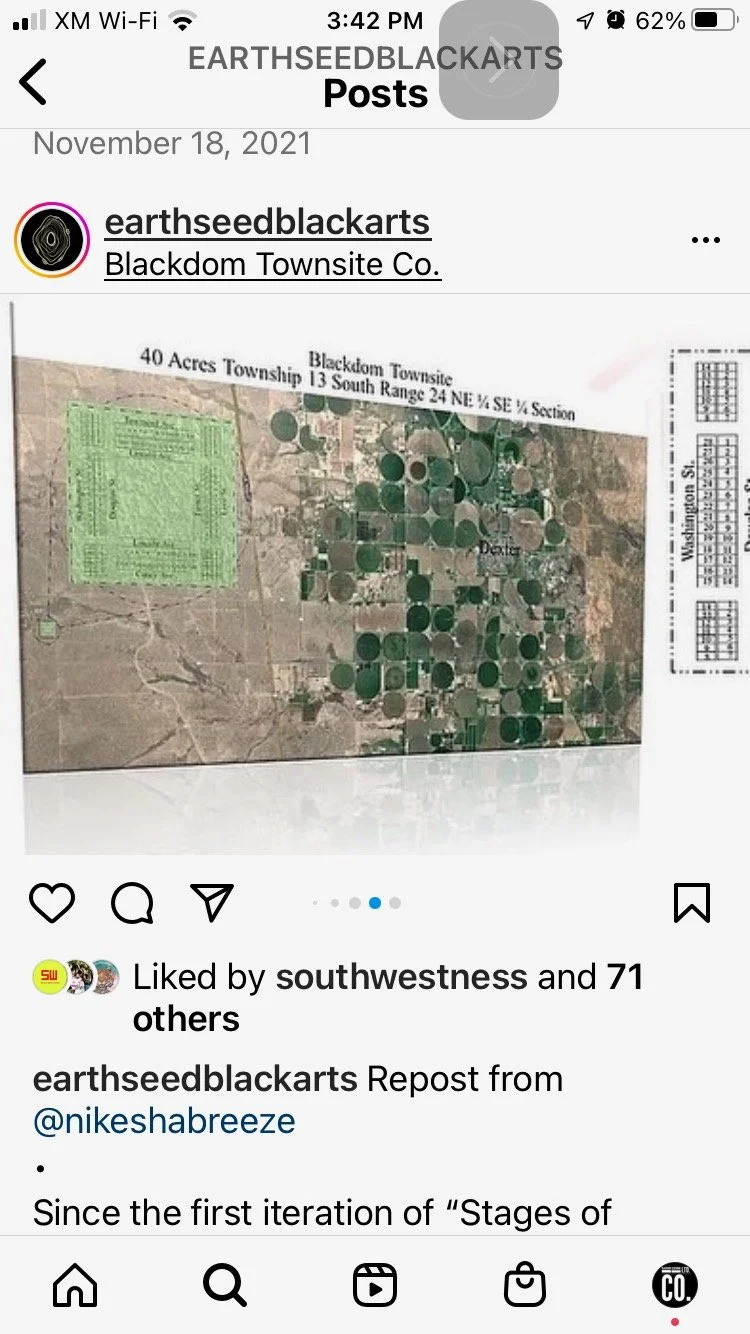
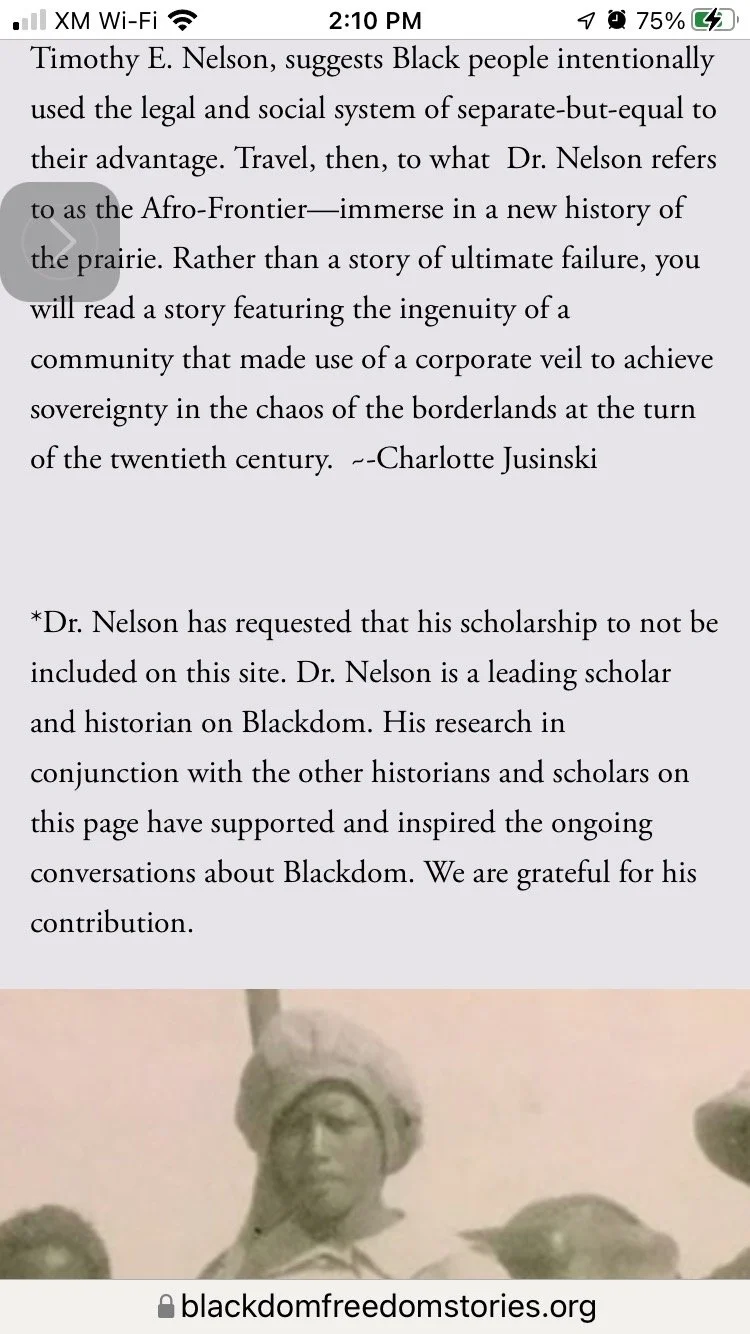
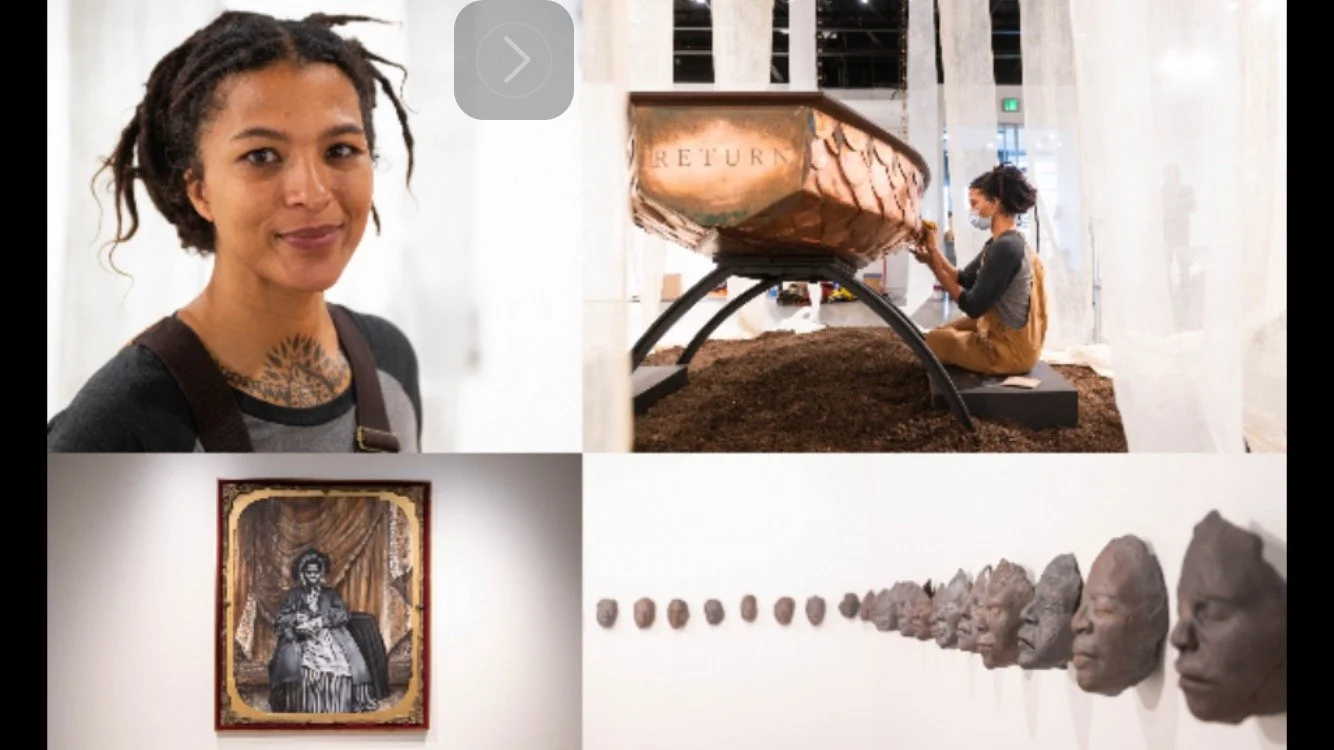

Nikesha Breeze contacted Dr. Nelson through Facebook Messenger, he relayed a request to coordinate with his business partner, Marissa Roybal, for a scheduled call that did not occur. The NMSU Art Museum misused Dr. Nelson’s work on their exhibit and website, incorrectly citing him and linking his website to Nikesha's without permission. Marisa Sage of NMSU permitted the inadequate and unauthorized use of his work. Further, the Earthseed Black Arts Alliance and NMSU Art Museum shared a map with Dr. Nelson’s watermark on social media without crediting him, missing an opportunity to acknowledge his contributions. At the NMSU opening, Nikesha discussed Blackdom Oil without crediting Dr. Nelson, a pattern repeated during the Blackdom Panel discussion. Despite expressing gratitude for Dr. Nelson’s contributions, Nikesha did not seek his permission or involve him in discussions.
Following complaints, NMSU made some corrections, including removing the unauthorized website link and attempting to correct Dr. Nelson's name. They also opted to delete two Instagram posts instead of crediting Dr. Nelson. However, Nikesha again failed to acknowledge him during an Instagram Live event when she mentioned Blackdom Oil. Additionally, another Taos artist contacted Dr. Nelson highlighting Nikesha wearing what appears to be a Blackdom Illuminated T-shirt gifted by Dr. Nelson’s team.
An interview with Dr. Nelson by the Taos Center for the Arts was never published, suspected to have been shared with Nikesha in preparation for the NMSU event. At the Albuquerque Museum exhibit in 2022, project manager Hakim Bellamy and Rita Powdrell did not include Dr. Nelson in installations related to New Mexico Black Homestead history. The Albuquerque Museum later offered an event tied to the publication of Dr. Nelson’s book, but no further communication was received after reaching out in 2023.
BEA Advisory Council Members that have been in our circles of influence: Timothy Nelson, Los Alamos; Hakim Bellamy, Albuquerque; Nancy Lopez, University of New Mexico, Albuquerque; Patricia Trujillo, deputy cabinet Secretary, NM Higher Education Department; Vernon Oliver, Rio Rancho; Arlen Nelson, Kimberly York, Las Cruces; Nicole Bedford, Albuquerque; Sheryl F. Means, Albuquerque.
Welcome to Blackdom Townsite Corp.