Planting Seeds of Freedom in the Pecos Valley of New Mexico: How Blackdom Grew Its Roots through Dry-Farming
Blackdom in the Borderlands: Significance of the Afro-Frontier (1903-1929)
El Palacio Magazine | March 2021 | Introduction:
In the early 1900s, the North American continental interior hosted two different centuries-long global colonization schemes. The Pecos Valley region’s economic surge underwent the largest infrastructure projects in the world at the time and brought exploitation of people and land. African descendants under the conditions of American Blackness (Black people) sought opportunity in the colonization collision at Mexico’s northern frontier and the United States’ western frontier. Through the homestead process in the southeastern section of the New Mexico Territory, Black people became colonizers. After the discovery of oil in New Mexico, they fully participated in the bonanza and received royalties that extended through the post-World War II era. In this essay, we explore an intersection of African descendants in diaspora, who quarantined themselves to achieve the goals of their ancestral strivings.

Maya L. Allen: With a background in systematics of algae as an undergraduate researcher, Ms. Allen has since gone on to work in marine, fresh-water and terrestrial systems. Ms. Allen also was a participant in the National Science Foundation’s Advancing Digitization of Biodiversity Collections Project as an undergraduate, where she contributed to this important effort to make academic collections more accessible to the global research community and the public. She conducted her MS thesis work on resolving the phylogeny of Glossopetalon, a small genus of flowering shrubs native to SW North America using restriction site associated DNA sequencing (RAD-seq). Ms. Allen has transitioned to exploring research questions focused on the phenotypic plasticity’s role in evolution and patterns of plasticity throughout species ranges. As a graduate student at UNM she is a mentor to students from underrepresented groups through the Project for New Mexico Graduate Students of Color program and as a Research Coaching Fellow.

Dr. Richard Edwards haD been diligently working on this matter since 2008. See the link for his article below.

Richard Edwards is a primary leader in the “Homestead Records Project,” a consortium formed to digitize, preserve and make accessible approximately two million original homestead land-entry files.
This unfortunate decision would leave the important homesteading states of Colorado, Montana, Kansas, North Dakota, South Dakota, Oklahoma, Oregon, New Mexico, Washington, and California back in the hard-to-access and costly-to-access paper records regime. I believe NARA’s decision is mistaken, and that it should be a HIGH priority to finish digitizing these records. Richard Edwards, Director, Center for Great Plains Studies, Professor of Economics, August 31, 2018
An interview with Gwenyth Doland.
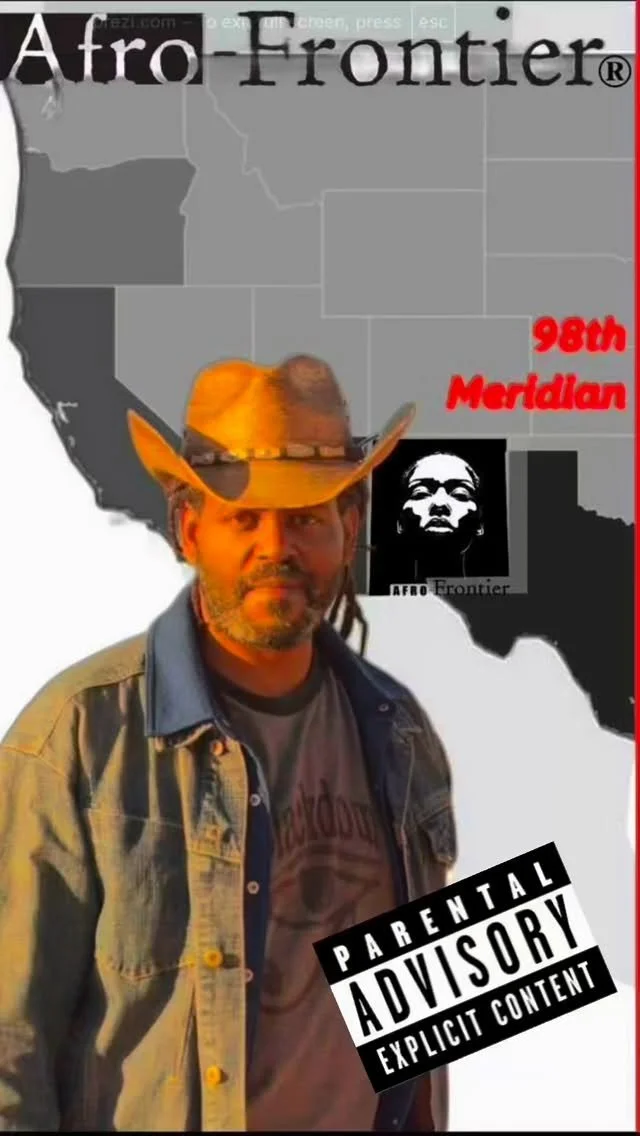
Passionate about the significance of the Afro-Frontier in American history, Dr. Timothy E. Nelson uncovers the forgotten history of New Mexico’s Blackdom.
New Mexico Black History Black History Month 2020

“They called it Blackdom for a reason. This was a Black Kingdom where sovereigns lived.”
—Timothy E. Nelson
Some 60-plus years before African Americans marched and fought for equal treatment in the nation’s civil rights movement, Blackdom stood as a symbol that African Americans could be masters of their own destiny.
“Blackdom proved black people could thrive, not just survive,” said African American historian and author Timothy Nelson, who wrote a 200-page dissertation on the rise and fall of Blackdom in 2015 for the University of Texas at El Paso.
“They called it Blackdom for a reason. This was a Black Kingdom where sovereigns lived,” he said.
And yet, some 30 years after its founding in the early 1900s, Blackdom was all but abandoned, a victim of drought, nature and an oil boom gone bust because of the Great Depression.
Today, a plaque commemorating the history of Blackdom and a few stone ruins are all that remain of the original community, located about eight miles west of Dexter and 20 miles south of Roswell.
Blackdom’s fight for a self-sustaining life came decades before King urged African Americans to take to the streets to demand equality with such phrases as, “If you can’t fly then run if you can’t run then walk if you can’t walk then crawl, but whatever you do, you have to keep moving forward.”
Welcome to Blackdom Townsite Corp.
View fullsize
![]()
View fullsize
![]()
View fullsize
![]()
View fullsize
![]()